F244
Bishops, Elders, Pastors
F244
Bishops, Elders, Pastors
These three terms are, however, misleading in view of the misapplication of them in churches of various denominations; hence, it is necessary that we explain that the word bishop simply signifies overseer; and that every appointed Elder was recognized as an overseer of a work great or small. Thus, for instance, on one occasion the Apostle was met by the elders of the Church at Ephesus, and in giving them his parting admonition said: “Take heed to yourselves and to the Church over which the holy Spirit hath made you overseers.” Acts 20:28
This position of general overseer was not restricted to the apostles: the Lord in his providence raised up others to serve the Church in this manner—”not for filthy lucre, but of a ready mind”—with a desire to serve the Lord and the brethren. Primarily, Timothy engaged in this service under the direction of the Apostle Paul and partially as his representative, and was commended to various companies or ecclesias of the Lord’s people. The Lord was, and is still, entirely competent to continue to send such overseers as he chooses to advise and admonish his flock. And the Lord’s people should be thoroughly competent to judge of the value of the advice offered by such overseers. It should be attested by a godly life, humble demeanor and spirit of self-sacrifice; by an absence of all scheming for honor and filthy lucre (financial gain), as well as by teaching which would stand the scrutiny of thoughtful Bible study—searching the Scriptures daily to see whether or not their presentations fully accord with both the letter and spirit of the Word. This, as we have seen, was done with the teachings of the apostles—and as they invited the brethren to do—commending those specially who were thus cautious without being fault finding, hypercritical. Acts 17:11
However, so far as we may judge from Church history, the spirit of rivalry and love of honor rapidly took the place of the spirit of humble devotion and self-sacrifice, while credulity and flattery readily superseded Scripture-searching; and as a result the overseers gradually became dictatorial—gradually claimed equality with the apostles, etc.—until finally amongst them arose a rivalry, and some of them became known and distinguished by the title of chief or archbishops.
We are happy, however, to take our position amongst these disesteemed ones, to copy closely the example of the primitive Church and to enjoy correspondingly similar liberties and blessings.
As elders of the Church are all overseers, caretakers, watchers of the interests of the Church, some locally and some in the broad and general sense, so also each, according to his talent and ability, might serve the flock, one as an evangelist, whose qualifications fitted him and whose conditions permitted him to go about preaching the truth to beginners—finding those possessed of an ear to hear the good tidings, etc.; another serving the flock as a pastor (shepherd), because of special qualifications of a social kind, enabling him to look after the interests of the Lord’s people personally, individually—visiting them at their homes, encouraging them, strengthening them, holding together and defending them against the wolves in sheep’s clothing who would bite and devour them.
There is no suggestion in the Scriptures that any person disqualified for the work to be done should be considered the Lord’s appointee to that position for which he lacks special adaptation; but rather it is as a duty that in the body of Christ each member should serve the others according to his talents—according to his abilities—and that each should be modest enough, humble enough, “not to think of himself more highly than he ought to think, but to think soberly,” according to the actual value of the talents the Lord has bestowed upon him. Neither should the Church recognize those of their number desiring to be greatest on that account. On the contrary, they should take cognizance of humility as being one of the essential qualifications to eldership or to service in any department. If, therefore, two brethren seem to have equal talent, but one is ambitious and forward and the other humble and backward, the Spirit of the Lord, which is the spirit of wisdom and of a sound mind, would teach the Lord’s people to appreciate the humbler brother as the one whom the Lord would specially favor and wish them to put into the more prominent place in the service.
It seems less remarkable that “goats” and goat-like sheep in the Lord’s flock should aspire to leadership, than that the true sheep who recognize the Master’s voice, who know his Spirit and who are seeking to do his will, should with docility permit such goats or goat-like sheep to take the leadership amongst them. It is well that we follow peace with all men; but where we disregard the Word and Spirit of the Lord for the sake of peace it will be sure to result injuriously to a greater or less extent. It is well that all should have the docile, sheep-like nature; but it is necessary also that the sheep have character, else they cannot be overcomers; and if they have character they should remember the Chief Shepherd’s words, “My sheep hear my voice [obey it]…and they follow me,” “a stranger will they not follow…for they know not the voice of strangers.” (John 10:5,27) It is the duty, therefore, of every sheep to take special notice of the message and the manner of every brother before they aid in putting him forward as an overseer, either local or general. They should first be convinced that he has the real qualifications of an elder in the Church—that he is sound on the basic doctrines of the Gospel—the atonement, redemption through the precious blood of Christ, and full consecration to him, his message, his brethren, his service. They should have charity and sympathy for the weakest of the lambs and for all the mentally and morally lame sheep; but they would be doing violence to the divine arrangement to choose such for their leaders or elders. They should have no sympathy with goats, or with wolves in sheep’s clothing who strive for place and authority in the Church.
It should be recognized that the Ecclesia is far better off without any public servant than to have for a leader a golden-tongued “goat,” who would surely not “direct their hearts into the love of God,” but seductively into wrong channels. Of such our Lord forewarned the Church; such the Apostle described, saying, “Of yourselves shall men arise speaking perverse things [wrong, misleading doctrines], to draw away disciples after them [to artfully attract followers after themselves].” The Apostle says that many shall follow their pernicious ways, by reason of whom the Truth will be evil spoken of. Acts 20:30; 2 Pet. 2:2
So we see it today. Many are preaching themselves rather than preaching the Gospel, the good tidings of the Kingdom; they are attracting disciples after themselves and their denominations, rather than attracting them to and uniting them only with the Lord, as members of his body. They are seeking to be the heads of churches, instead of having all the members of the body look directly to the Lord as the Head. From all such we should turn away—the true sheep should give them no encouragement in their wrong course. The Apostle Paul speaks of these as having a form of godliness but denying its power. (2 Tim. 3:5) They are great sticklers for days, forms, ceremonies, ecclesiastical authorities, etc., and are highly esteemed amongst men, but an abomination in the sight of the Lord, saith the Apostle. The true sheep must not only be careful to recognize the voice of the true Shepherd and to follow him, but they must remember also not to follow, not to support, not to encourage those who are self-seeking. Every one esteemed worthy of confidence in the Church as an Elder, should be sufficiently well known in advance to justify such confidence; hence, the Apostle says, “not a novice.” A novice might do the Church injury and might himself be injured also, by being puffed up, and thus be led away from the Lord and the proper spirit and the narrow path toward the Kingdom.
The Apostle Paul* gives very explicit advice concerning who might properly be recognized by the Church as elders—describing in detail what should be their character, etc. In his letter to Timothy on this subject (1 Tim. 3:1-7) he reiterates the same in slightly different language. In addressing Titus, who evidently was another general overseer (Tit. 1:5-11), he describes their duties toward the Church. The Apostle Peter on the subject says, “The elders which are among you I exhort, who am also an Elder,…Feed the flock of God which is among you, taking the oversight thereof…not for filthy lucre, but of a ready mind; neither as being lords over God’s heritage, but being ensamples to the flock.” 1 Pet. 5:1-3
They should be generous men, men of pure lives, having no more than one wife; and if they have children it should be noticed to what extent the parent has exercised a wholesome influence in his own family—for it should reasonably be judged that if he has been derelict in his duty toward his children, he probably would be unwise or derelict in his counsels and his general ministries amongst the Lord’s children in the Ecclesia, the Church. He is not to be double-tongued or deceptive, not to be a brawler or a contentious person. He should be one of good reputation amongst those outside the Church: not that the world will ever love or rightly appreciate the saints, but that the world should, at least, be unable to point to anything derogatory to their character as respects honesty, uprightness, morality, truthfulness. There is no limitation made respecting the number of elders in a Church or Ecclesia.
In addition to the foregoing limitations, it is required that an Elder shall be “apt to teach”; that is to say, he must have ability as a teacher, explainer, expounder of the divine plan, and thus to be able to assist the Lord’s flock in word and in doctrine.
Bible studies are the rule rather than the exception. The Scriptures clearly show that this was a custom in the early Church, that when they came together an opportunity was offered for the exercise of the various talents possessed by the various members of the body—one to speak, others to pray, many, if not all, to sing. Experience seems to show that those companies of the Lord’s people which follow this rule most closely, receive the largest amount of blessing and develop the strongest characters. That which is merely heard by the ear, however well-spoken and however good, is not impressed upon the heart so thoroughly as though the individual himself exercised his mind in connection with it, as is sure to be the case in a properly conducted Bible study in which all should have encouragement to take part.
Ordaining Elders in Every Ecclesia
If the little company have the Word and Spirit of the Lord before them and actuating them, the result of their united judgments, as expressed in an election of servants, should be accepted as the mind of the Lord on the subject—the persons chosen as elders would, in all probability, be the best and most suitable in the number. However, care needs to be observed that such selections are not made without due consideration and prayer; hence, it is advisable that due announcement be made in advance, and that it be recognized that only those who claim to be members of the New Creation (male and female) shall attempt to express the mind of the Lord on the subject—in the vote. Those who have made a full consecration of themselves to the Lord, and thus have come under the anointing and all the privileges of the “house of sons.” These alone are competent to appreciate and to express the mind, the will, of the Head of the body. These alone constitute the Church, the body of Christ, though others, who have not yet taken the step of consecration, but who are trusting in the precious blood, may be counted as members of “the household of faith” whose progress is to be hoped for, and whose welfare is to be considered.
“And when they had ordained them elders in every church [Ecclesia], and had prayed with fasting, they commended them to the Lord.” Acts 14:23
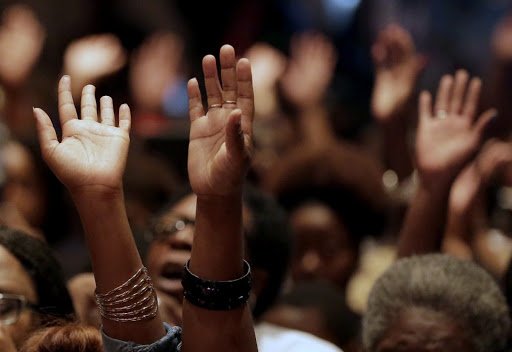
The form of this statement, with other frequent references to elders in connection with all churches, justifies the inference that this was the invariable custom in the early Church. The term “elders,” as seen in the text, includes evangelists, pastors, teachers, hence, it is important that we learn what is meant by this word “ordained.” At the present time this word is generally used in reference to a ceremony of installation; but this is not the significance of the Greek word kirotoneo used in this text. It means, “to elect by stretching out the hand,” still the usual form of voting. This definition is given in Prof. Young’s Analytical Bible Concordance. We will give also the definition set forth in “Strong’s Exhaustive Concordance.” The latter defines the root of the word—”A hand-reacher, or voter (by raising the hand).”
A totally different Greek word is used when our Lord declared of the apostles, “I have chosen you and ordained you.” (John 15:16) This is the same word, tithemi, used by the Apostle when, speaking of his ordination, he says: “I am ordained a preacher and an apostle.” (1 Tim. 2:7) But this ordination, the Apostle distinctly declares, was “not of men, nor by man, but by Jesus Christ and God the Father.” (Gal. 1:1) All of the members of the Anointed Body, united with the Head and partakers of his Spirit, are thereby similarly ordained, not indeed to apostleship like Paul, but to be ministers (servants) of the Truth, each to the extent of his talents and opportunities (Isa. 61:1)—the twelve only were ordained to be apostles, or special representatives—ministers plenipotentiary.
Recurring to the ordination or recognition of elders by the vote of the congregation (Ecclesia) of the New Creation, by “stretching forth the hand,” as seen above, we note that this was the customary mode; for the Apostle uses the same Greek word in telling how Titus became his helper. He says, “who was also chosen of the churches to travel with us.” The words italicized are from the Greek word kirotoneo which, as above shown, signifies “to elect by stretching out the hand.” And, further, the word “also” here implies that the Apostle himself was chosen by a similar vote. Not chosen or elected to be an apostle, but to be a missionary—a representative of the churches on this occasion, and, doubtless, at their expense.
Evidently, however, some of the Apostle’s subsequent tours were without the vote or support of the Antioch Church. (2 Tim. 1:15) Primitive Church regulations left all free to exercise their talents and stewardship according to their own consciences. The ecclesias (congregations) could accept or decline the services of apostles, even, as their special representatives; and the apostles could accept or reject such engagements—each exercising his own liberty of conscience.
But, is there no ordination of elders, etc., mentioned in the New Testament other than this—an election? Is there nothing signifying to give authority or permission to preach, as the English word ordain is now generally used in all denominations in connection with licensing and ordaining elders, preachers, etc.?
The Lord and the Apostle recognize not the elders, but the Church (Ecclesia) as the body of Christ; and whatever dignity or honor attaches to faithful elders, as servants of the Lord and the Church, is not merely their recognition of themselves nor their recognition by other elders. The congregation choosing must know them, must recognize their Christian graces and abilities in the light of God’s Word, else they can grant them no such standing or honor. No Elder, therefore, has any authority by self-appointment. Indeed, the disposition to ignore the Church, the body of Christ, and to make himself and his judgment superior to the whole, is first-class evidence that such a brother is not in the proper attitude to be recognized as an Elder—humility, and a recognition of the oneness of the Ecclesia as the Lord’s body, being prime essentials for such a service.
Nor should any brother assume public duties in the Church as leader, representative, etc., without an election—even though assured that there is no question respecting his acceptability. The Scriptural method of ordaining elders in all the churches is by congregational election—by stretching forth the hand in a vote. To insist on such an election before serving is to follow Scriptural order; it fortifies the Elder, and, additionally, reminds the Ecclesia of its duties and responsibilities as appointees of the elders in the Lord’s name and spirit—as expressing God’s choice, God’s will. Additionally, this Scriptural arrangement interests the members of the Ecclesia in all the words and deeds of the elders, as their servants and representatives. It opposes the too prevalent idea that the elders own and rule the congregation and puts an end to their thinking of them and speaking of them as “my people”—rather than as “the Lord’s people whom I serve.”
Why are not these matters, so clearly Scriptural, more generally understood and set forth? Because human nature is pleased to have honor and preferment, and falls readily into wrong conditions favorable to these; because they have been popular for seventeen centuries; because the people yield to these conditions and prefer them to the liberties wherewith Christ makes free. Then, too, many have felt so confident that the customs of Babylon must be right that they have never studied the Word of the Lord on this subject.
Nothing is said by inspiration respecting the period for which an Elder should be chosen: we are, therefore, at liberty to exercise reason and judgment on the question. Many persons may be esteemed elders, or developed brethren in the Church, and may be useful and highly appreciated, and yet not be of the chosen elders set forth by the Ecclesia as its representatives—evangelists, teachers, pastors. The “elder women”* are thus several times referred to honorably by the apostles, without the least suggestion that any of them were ever chosen as representative elders or teachers in the congregation (Ecclesia). Some chosen as suitable to the Ecclesia’s service might cease to possess the stipulated qualifications; or others might, under divine providence, advance to greater efficiency for the service of the Church. A year, or its divisions—a half or a quarter year—would seem appropriate periods for such services—the latter if the persons were less tried, the former if well tried and favorably known. In the absence of law, or even of advice or suggestion, it would be for each congregation to determine as best they can the Lord’s will in each case.
The Number of Elders
The number of elders is not limited in the Scriptures; but, reasonably, much would depend on the size of the Ecclesia, as well as upon the number available—competent, etc. (None should be assumed to be a believer and to be fully consecrated; both by word and act he should have given unmistakable evidences of both his faith and consecration long before being chosen an Elder.) We favor having as many as are possessed of the outlined qualifications, and the dividing of the services amongst them. If the proper zeal actuates them, some kind of missionary or evangelistic work will soon claim some of them, or portions of the time of many. Each Ecclesia should thus be a theological seminary from which efficient teachers would continually be going forth to wider fields of service. The Elder who would manifest jealousy of others and a desire to hinder them from ministering should be considered unworthy a continuance; yet, no one either incompetent or a novice should be chosen—to satisfy his vanity. The Church, as members of the body of Christ, must vote as they believe the Head would have them vote.
A caution should perhaps be given against electing an Elder where none is found competent for the service, under the qualifications set forth by the apostles—far better have no elders than incompetent ones. In the interim, until a brother shall be found competent for the service, let the meetings be of an informal kind.
Only the Ecclesia (the body—male and female), the New Creatures, are electors or voters. The general “household of faith,” believers who have not consecrated, have nothing to do with such an election; because it is the Lord’s choice, through his “body,” possessing his Spirit, that is sought. All of the consecrated body should vote, and any of them may make nominations at a general meeting called for the purpose—preferably a week in advance of the voting, so as to afford time for consideration.
Some have urged that the voting should be by ballot, so that all might be the more free to express their real choice. We answer that whatever advantage there is in this is offset by a disadvantage: namely, in the loss of the discipline and character-building accomplished by the apostolic mode of “stretching forth the hand.” Each should learn to be candid and straightforward, yet, at the same time, loving and gentle. The vote, be it remembered, is the Lord’s choice—expressed by members of his body to the extent of their ability to discern it. No one is at liberty to shirk this duty, nor to favor one above another except as he believes he has, and expresses, the mind of the Lord.
In worldly matters the voice of a bare majority decides; but evidently it should not be so in the Lord’s Ecclesia, or body. Rather, so far as practicable, the jury-rule should prevail and a unanimous verdict or decision be sought. The brother receiving a bare majority in the vote could scarcely feel comfortable to accept that as “the Lord’s choice,” any more than could the congregation. Another candidate able to draw the support of all, or nearly all, should be sought for, by vote after vote, week after week, until found or the matter abandoned; or let all agree on the two or three or more who could serve in turn and thus meet the ideas of all. But if fervent love for the Lord and the Truth prevail, with prayer for guidance and the disposition to prefer one another in honor, where talents are on an equality, it will generally be found easy to unite in judgment respecting the divine will on the subject. “Let nothing be done through strife or vainglory.” “Preserve the unity of the Spirit in the bond of peace.” Phil. 2:3; Eph. 4:3
The same order should prevail in respect to the choice of helpers called deacons and deaconesses, whose good repute should also be noted as a qualification. (See 1 Tim. 3:8-13.) These may be for any service required—and they should have as many of the qualifications of eldership as possible, including aptness in teaching, and graces of the Spirit.
To sum up the forgoing:
Those considered for eldership must display the qualifications set forth in both Timothy and Titus by the Apostle Paul.
Only those who have given their lives the Lord in full sacrifice and are regular attendees to the meetings (bringing in friends or family to vote for you, should be an immediate disqualification). All who are consecrated as stated above have the duty to vote the Lord’s will and stand for what they believe the Lord’s will is with their vote. Brother and Sisters in Christ both have equal votes.
To become an elder, a brother should have at least 75% of the vote. If then congregation is 20 brothers and sisters, he should have at least 15 votes to qualify for the office of an elder.
No one is an elder for life. No one is a self-appointed elder. One is only an elder/bishop/pastor by the vote of the congregation. Election frequency should be determined by the congregation. Usually it is annually, but if one is a first time elder, the congregation may decided to elect for a few months to see how the brother does.
The elder does not own or rule the congregation. The congregation is who has the power, by vote for everything it is to do. The elder is a servant of the congregation.